

Your first firearm purchase brings pride and a serious duty of care. Safe ownership comes from repeatable habits that work on a busy day. Reinforcement after purchase keeps those habits steady.
KT Back Road Arms supports new owners with advice on safe handling and practical storage that suits real homes. A clear plan reduces household risk, supports lawful use, and protects your reputation.
A simple rule set keeps decision-making consistent. Use these rules at home, in a car park, and on a firing line. Make them non-negotiable for every adult who handles a gun.
Four rules shape safe behaviour.
Assume the gun can fire. That mindset stops casual handling and blocks shortcuts.
Start each session with a status check using the manufacturer’s manual for that model. If any step feels unclear, request a walk-through from staff with a display unit.
Muzzle direction controls the outcome of a mistake. Pick a safe line before contact, then keep that line.
At home, choose a direction that avoids people and rooms used often. At the facility, follow posted rules and staff instructions.
Trigger discipline prevents negligent discharge. Rest your index finger along the frame, above the trigger guard, until you are ready to fire on the line.
Stress can pull a finger inward without awareness. Practice the correct finger position with a firearm that has no ammunition in it and no magazine inserted.
Targets look clear on a supervised lane. Other settings include unknown surfaces and movement. Bullets can pass through common materials and reach unintended areas.
Ask three questions before any shot.
What is the target
What sits behind it
Who can enter the space
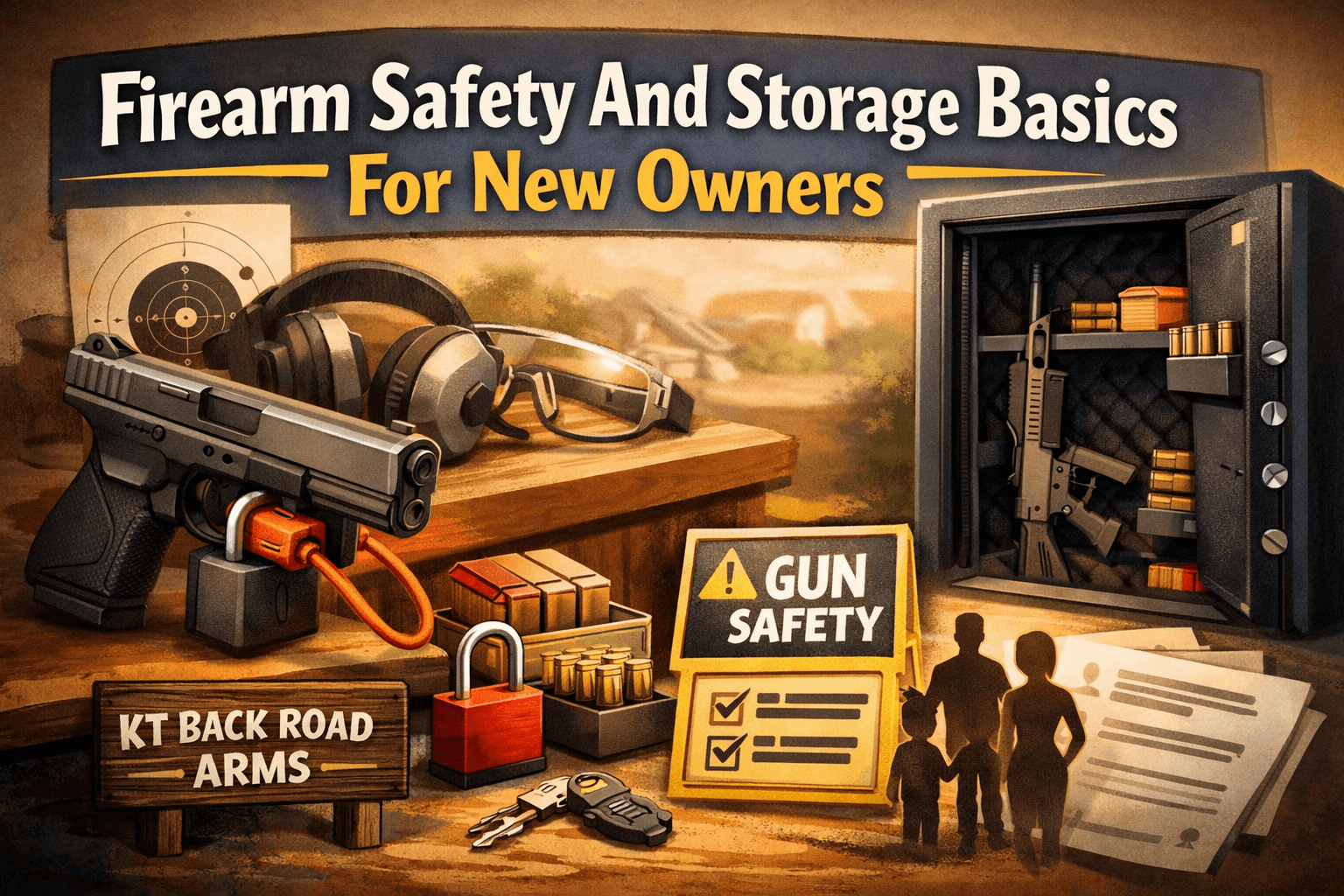
Storage hardware reduces access. Routine closes the gaps that equipment leaves behind. Plan secure keeping around children, guests, tradespeople, and day-to-day distractions.
Here are the main parts of a secure setup that hold up over time.
Options run from basic locks to full safes. Aim for restricted access, consistent use, and firm placement.
Table 1 compares common options.
| Storage Option | Access Control | Strengths | Watch For |
|---|---|---|---|
| Cable Or Chamber Lock | Combination | Low cost, portable | Combination security, daily discipline |
| Trigger Lock | Keypad | Simple, available | Fit varies by model |
| Lock Box | Code or biometric | Quick access | Anchoring, battery care |
| Gun Safe Or Cabinet | Dial | Strong theft resistance | Placement, humidity plan |
Select a location that stays discreet and accessible for authorised adults. Use anchoring points that suit your floor and wall type.
Ask the shop team about anchoring and location choices. Anchoring increases theft resistance and reduces movement during access.
Security fails when access spreads. Treat the key or code like a business credential.
Limit knowledge to authorised adults. Change codes after guest stays or any change in household trust. Keep keys away from bedside tables, kitchen drawers, and common “hiding” spots.
Ammunition belongs in a lockable container in a dry, stable area. Keep cartridges separate by calibre and keep labels intact.
These habits support orderly ownership.
Lock ammunition away from children
Keep it away from heat sources
Separate calibres to prevent errors
Record purchases for tracking
Routines win when they match your schedule. Pick one handling area with good light and minimal interruption. Return the firearm to its lockable container before any other task, every time.
A household rule helps. No unsecured firearms at any point.
Transport adds risk through movement and distraction. Visits to a shooting facility introduce new rules and social pressure. A plan supports calm, lawful behaviour from home to the facility and back.
The following are the key factors that influence safe movement and public handling.
Check local requirements for transport, then follow one consistent method. Many jurisdictions expect a case, separation from ammunition, and secure placement during travel.
Use a case that fits the firearm and has a lock. Keep the case in the boot where practical. Place ammunition in a separate container.
Avoid handling in public spaces. Move from the locked unit to the case at home, then from case to your firing lane after you arrive.
Facility culture rewards calm conduct. Ask for a safety brief, then follow commands at once.
Use this list as a quick reminder.
Point the muzzle downrange
Follow ceasefire instructions at once
Wear ear and eye protection every visit
Ask staff before changing targets
Pack gear away after the firearm check
Systems reduce reliance on memory. They set expectations for family members and they help leaders model responsible ownership.
These are the building blocks that turn intent into consistent practice.
A structured course teaches safe handling, secure storage, and legal responsibilities. Schedule a refresher each year. Skills fade without use and complacency creeps in.
Maintenance protects reliability and value. Safety must lead the process.
Read the manual before any cleaning task. Confirm no ammunition is present in the firearm or the room. Choose a stable surface with good lighting. Ask staff for advice on cleaning tools that match your model.
Treat the firearm as a recorded asset. Keep purchase documents, serial numbers, and photos in a secure place. Consider insurance that covers theft and damage.
Clear personal rules reduce professional risk. Leaders often travel, host guests, and manage vehicles. Security and transport routines should match that reality.
Questions signal maturity. Reach out to a reputable instructor, a gunsmith, or store staff when something feels unclear.
A strong safety plan becomes normal life with repetition. The payoff stays simple. Fewer risks, more confidence, and a home that stays secure.